Article Outline
- Define P6 pixel pitch and explain its relationship with image quality.
- Connect technical specifications with real event requirements.
- Explain viewing distance, brightness, weather protection, cabinet design, and refresh rate.
- Show how P6 rental screens can support different event formats.
- Provide a practical checklist for choosing a reliable rental display.
- Answer common questions about installation, outdoor use, content, maintenance, and operation.
What Is a P6 Rental Display Screen?
The term P6 describes a pixel pitch of approximately 6 mm. Pixel pitch is the distance between the centers of two adjacent LED pixels. A smaller pitch places more pixels into the same physical area and generally supports finer detail at shorter viewing distances.
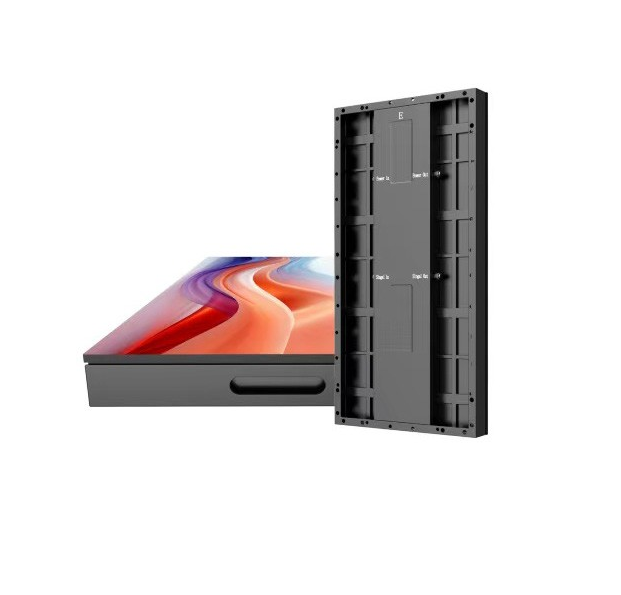
A P6 rental display is therefore not simply a large television scaled up for events. It is a modular LED display system built from cabinets that can be transported, assembled, connected, operated, dismantled, and deployed again. This rental-oriented structure is particularly important for event companies that may need the same screen system at different venues.
Typical P6 products use SMD RGB LED technology and modular aluminum cabinets. Actual cabinet dimensions, weight, brightness, protection rating, scan mode, refresh rate, and service method vary by manufacturer and product series. For example, published P6 products commonly use cabinet formats around 500 × 500 mm or 576 × 576 mm, while other configurations are also available.
Why Does P6 Work Well for Rental Events?
Event organizers usually face several competing requirements: the screen must be large enough for the audience, clear enough for cameras and spectators, bright enough for the environment, easy to transport, and fast enough to install within a limited production schedule.
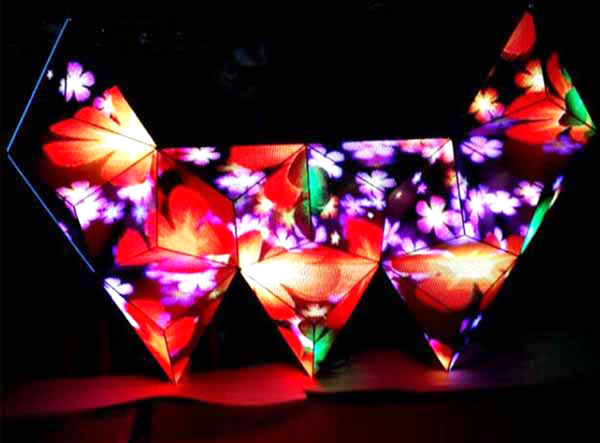
P6 can be useful because its 6 mm pitch sits between fine-pitch LED products intended for close viewing and larger-pitch products designed primarily for long-distance viewing. Published product information for P6 rental systems commonly identifies concerts, conferences, exhibitions, stage performances, advertising, celebrations, and outdoor events as suitable applications.
What Specifications Should You Check?
Looking only at “P6” is not enough to evaluate a rental LED screen. Two products can both be P6 while having substantially different cabinet construction, brightness, weather protection, weight, refresh performance, and serviceability.
| Specification | Why It Matters | What to Confirm |
|---|---|---|
| Pixel Pitch | Determines pixel spacing and influences detail at different distances. | Confirm the actual pitch is 6 mm and whether the application matches the expected viewing distance. |
| Brightness | Controls visibility under ambient light, particularly outdoors. | Check rated brightness, adjustment range, and whether automatic brightness control is available. |
| Refresh Rate | Important for smooth motion and camera-based event production. | Ask for the actual refresh-rate specification and test the screen with event cameras when necessary. |
| IP Protection | Relevant to outdoor installations exposed to dust, rain, and changing weather. | Confirm front and rear protection ratings instead of assuming every P6 panel is weatherproof. |
| Cabinet Weight | Affects transportation, rigging, labor, and installation time. | Confirm the complete cabinet weight and lifting requirements. |
| Cabinet Size | Influences screen dimensions and the efficiency of transport and assembly. | Check dimensions, corner protection, locking method, and available cabinet formats. |
| Maintenance | Fast servicing reduces downtime during an event. | Confirm whether modules and power or receiving components can be replaced efficiently. |
Published P6 specifications illustrate why product-to-product comparison matters. One outdoor P6 product, for example, lists IP65 protection, a 576 × 576 mm cabinet, and a 32 × 32 module resolution, while another P6 outdoor specification lists different cabinet dimensions, brightness, weight, and refresh-rate values. Aglare+1
Viewing distance is one of the most important factors when planning a P6 screen. As a general principle, viewers farther from the screen are less likely to perceive individual pixels, while viewers standing close to the LED wall may notice the 6 mm pixel structure.
Published P6 products commonly identify several meters as the beginning of a suitable viewing range, but the practical result depends on content, screen size, camera position, ambient lighting, audience expectations, and the exact LED package used. One published P6 rental specification lists a shortest viewing distance of approximately 6 m, while another gives a broader range. YUCHIP LED+1
- Measure the approximate distance from the screen to the closest important audience area.
- Consider whether people will walk directly in front of the display.
- Check whether presenters, products, or performers will appear close to the screen.
- Consider camera positions if the event will be professionally filmed or livestreamed.
- Choose the pitch based on the complete venue layout rather than screen size alone.
Indoor and outdoor P6 displays can share the same 6 mm pixel pitch while having very different engineering requirements.
Indoor P6
Indoor applications normally have controlled lighting and no direct exposure to rain. The design can therefore prioritize visual appearance, lightweight handling, indoor brightness, and installation flexibility. Indoor P6 rental products are often used for exhibitions, conferences, shopping environments, hospitality spaces, and indoor stage applications. YUCHIP LED
Outdoor P6
Outdoor systems must deal with sunlight, wind, moisture, dust, temperature changes, and potentially demanding transportation conditions. Weather protection is therefore a critical specification. Some outdoor P6 rental products are specified with IP65 protection and high brightness for outdoor visibility. Aglare+1
Do not assume that every P6 screen is suitable for outdoor use. The complete cabinet construction and protection rating should be verified before an outdoor deployment.
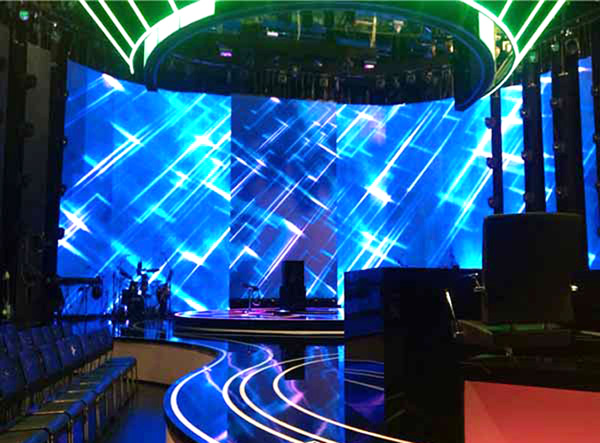
The modular nature of rental LED displays makes them suitable for temporary visual environments where a conventional fixed display may be impractical.
- Concerts: Large LED walls can display performers, graphics, lyrics, live camera feeds, and sponsor content.
- Festivals: Outdoor P6 systems can provide stage visuals that remain visible across a large audience area.
- Corporate Events: Presentations, speaker backgrounds, branding, videos, and live feeds can share one visual platform.
- Trade Shows: Dynamic product demonstrations can attract attention more effectively than static graphics alone.
- Sports Events: Scores, replays, advertising, schedules, and live content can be presented to spectators.
- Weddings and Celebrations: Photos, videos, event graphics, and personalized backgrounds can be displayed on a large scale.
- Outdoor Promotions: High-brightness configurations can support temporary advertising and promotional installations.
The correct screen configuration still depends on the venue. A display designed for an outdoor festival should not automatically be treated as the ideal solution for a close-viewing indoor conference.
A rental LED screen experiences a different lifecycle from a permanent installation. It may be packed, transported, assembled, dismantled, and repacked repeatedly. This makes mechanical design just as important as image performance.
Fast Locking
Quick-lock mechanisms can reduce assembly time and help technicians create consistent cabinet connections. Published rental products commonly highlight fast locking systems as a feature for repeated deployment. YUCHIP LED
Lightweight Cabinet Construction
Lower cabinet weight can reduce handling effort and transportation demands. However, weight should never be evaluated separately from structural strength, rigging requirements, and safety procedures.
Transport Protection
Flight cases or purpose-built transport systems can help organize cabinets and accessories between events. This is particularly valuable for professional rental companies managing multiple deployments.
Serviceability
A damaged module or power component should be replaceable without unnecessarily dismantling the entire display. Maintenance access should therefore be considered during product selection.
The screen itself is only one part of the production system. A smooth event also requires signal distribution, power planning, content preparation, processors, receiving cards, cables, structural support, and trained operators.
Before installation, create a complete deployment plan covering the screen dimensions, cabinet quantity, power distribution, signal paths, mounting method, control location, content resolution, and emergency procedures.
- Confirm the venue dimensions and screen position.
- Verify available electrical capacity and distribution.
- Confirm the structural or ground-support method.
- Prepare signal cables and spare components.
- Test every cabinet before the event starts.
- Load and verify all presentation and video content.
- Perform a full brightness, color, signal, and playback test.
For live productions, testing should include the actual cameras and switching equipment that will be used during the event. This is particularly important when the LED wall is part of a broadcast or livestream.
A clear specification request can prevent many common project problems. Instead of asking only for the rental price of a P6 screen, request a complete technical and service proposal.
- What is the exact pixel pitch? Confirm the 6 mm specification and LED configuration.
- What is the cabinet size and weight? This affects transportation and installation.
- What brightness is available? Outdoor applications need sufficient brightness for the environment.
- What is the IP rating? Verify the actual protection rating for outdoor use.
- What refresh rate is specified? This matters for moving images and camera-based production.
- How is maintenance performed? Ask about module, power supply, and receiving-card replacement.
- What accessories are included? Clarify processors, cables, cases, spare parts, rigging components, and control equipment.
- Who handles installation? Define responsibilities between the rental provider, venue, and production team.
- What happens if a cabinet fails? Confirm the spare-parts and technical-support arrangement.
- Is the system suitable for the intended venue? Match the technical specification to the actual environment.
Reliability starts before the screen arrives at the venue. Professional rental workflows typically include equipment inspection, functional testing, cabinet cleaning, connector inspection, pixel checks, and testing of control electronics before deployment.
- Inspect LED modules for physical damage.
- Check power and signal connectors before assembly.
- Test cabinets individually before building the complete wall.
- Keep compatible spare modules and critical electronic components available.
- Protect cabinets during transportation and storage.
- Record recurring faults to identify equipment that requires service.
- Follow manufacturer limits for temperature, humidity, power, and installation.
A useful maintenance strategy is preventive rather than reactive. Discovering a loose connector or damaged module during a pre-event test is significantly easier to manage than discovering it after the audience has entered the venue.
What does P6 mean on an LED display?
P6 generally means a 6 mm pixel pitch. It describes the distance between neighboring LED pixels and helps determine the appropriate viewing distance and image-detail characteristics.
Is a P6 rental display suitable for outdoor events?
Yes, when the specific product is engineered and rated for outdoor use. Outdoor P6 products can include high-brightness LEDs and weather-protection features such as IP-rated cabinets. Always verify the actual protection rating of the product being supplied. Aglare+1
Is P6 suitable for concerts?
P6 is commonly used for concerts, stage performances, festivals, and other large-format events. The suitability depends on audience distance, screen position, camera requirements, brightness, and venue conditions.
Can a P6 LED screen be used indoors?
Yes. Indoor P6 rental products are available, although the appropriate brightness, cabinet structure, protection level, and viewing distance may differ from outdoor configurations. YUCHIP LED
Does P6 mean every screen has the same specifications?
No. P6 only identifies the approximate pixel pitch. Cabinet size, brightness, refresh rate, IP protection, weight, module configuration, maintenance access, and other specifications can vary significantly between models.
What should I prepare before ordering a P6 rental display?
Prepare the screen dimensions, indoor or outdoor environment, approximate audience distance, installation method, event duration, content type, camera requirements, power conditions, and preferred control system. These details allow the supplier to recommend a configuration that matches the actual project.
Can P6 rental LED cabinets be reused for different screen sizes?
Modular cabinets are designed to be assembled into different screen dimensions within the limits of the cabinet system. The final screen size should be planned around cabinet dimensions, structural requirements, aspect ratio, signal resolution, and venue conditions.
Why is refresh rate important for an LED rental screen?
Refresh rate influences how the display handles motion and how it appears when captured by cameras. For events involving professional photography, video recording, broadcast, or livestreaming, the display should be tested with the production cameras rather than evaluated only by eye.
A P6 Rental Display Screen can be an effective solution when the event requires a large, modular, reusable LED video wall and the audience is positioned at a suitable distance. Its 6 mm pixel pitch provides a practical foundation for many medium- and large-format applications, but pixel pitch should never be the only purchasing criterion.
The best project decisions come from looking at the entire system: pixel pitch, viewing distance, brightness, refresh rate, weather protection, cabinet weight, locking structure, maintenance access, signal processing, power requirements, transportation, installation, and technical support.
For event organizers and rental companies, this complete approach can reduce installation surprises, improve operational efficiency, and help ensure that the LED display performs according to the demands of the venue and audience.
Planning a P6 Rental Display Project?
ShenZhen Allenson Photoelectric Co., Ltd can help you evaluate your application according to screen size, viewing distance, indoor or outdoor conditions, installation requirements, and event workflow. Instead of selecting a screen from pixel pitch alone, discuss the complete project requirements with a professional LED display supplier.
Whether you are preparing a concert, exhibition, conference, festival, sporting event, wedding, or commercial promotion, a properly configured rental LED display can make the visual system easier to deploy and more dependable in real-world use.
Need a P6 Rental Display Screen for your next project? Contact us to discuss your application, technical requirements, and customized LED display solution.