English
- English
- Español
- Português
- русский
- Français
- 日本語
- Deutsch
- tiếng Việt
- Italiano
- Nederlands
- ภาษาไทย
- Polski
- 한국어
- Svenska
- magyar
- Malay
- বাংলা ভাষার
- Dansk
- Suomi
- العربية
- हिन्दी
- Pilipino
- Türkçe
- Gaeilge
- Indonesia
- Norsk
- تمل
- český
- ελληνικά
- український
- Javanese
- فارسی
- தமிழ்
- తెలుగు
- नेपाली
- Burmese
- български
- ລາວ
- Latine
- Қазақша
- Euskal
- Azərbaycan
- Slovenský jazyk
- Македонски
- Lietuvos
- Eesti Keel
- Română
- Slovenski
- मराठी
- Srpski језик

News
Why Is a P1.25 Fine-Pitch High-Definition LED Display Ideal for Premium Visual Applications?
Article Summary
A P1.25 Fine-Pitch High-Definition LED Display is designed to deliver detailed, consistent, and immersive visual experiences in indoor environments where image clarity matters. With a pixel pitch of just 1.25 mm, this display technology provides high pixel density, smooth image presentation, and excellent viewing detail at relatively short distances.
From corporate conference rooms and broadcasting studios to command centers and premium commercial spaces, P1.25 LED displays help organizations present information more effectively. However, selecting the right display involves more than comparing pixel pitch. Brightness, viewing distance, color consistency, cabinet construction, maintenance access, and system compatibility all influence long-term performance. This guide explores the essential factors buyers should understand before investing in a fine-pitch LED display.

Table of Contents
- Understanding P1.25 Fine-Pitch High-Definition LED Display Technology
- Why Pixel Pitch Matters for High-Definition Visual Performance
- Key Advantages of a P1.25 LED Display
- Where P1.25 Fine-Pitch LED Displays Are Used
- Important Technical Specifications to Evaluate
- How to Choose the Right P1.25 LED Display
- Installation and Maintenance Considerations
- P1.25 LED Display vs. Other Pixel Pitch Options
- Common Purchasing Mistakes and How to Avoid Them
- Future Trends in Fine-Pitch LED Display Technology
- Frequently Asked Questions
- Final Thoughts
1. Understanding P1.25 Fine-Pitch High-Definition LED Display Technology
A P1.25 Fine-Pitch High-Definition LED Display is an indoor LED screen with a pixel pitch of 1.25 millimeters. Pixel pitch refers to the center-to-center distance between two adjacent pixels. In practical terms, a smaller pixel pitch means that more pixels can fit into the same display area, resulting in greater image detail and smoother visual presentation.
Unlike traditional large-pitch LED screens designed primarily for long-distance viewing, P1.25 displays are developed for environments where viewers may stand or sit relatively close to the screen. This makes them particularly suitable for professional applications that involve detailed graphics, text, charts, video feeds, and other information-rich content.
What Does P1.25 Mean in Practical Terms?
The 1.25 mm pixel pitch determines the spacing between neighboring pixels. For example, a display with a horizontal width of 1,000 mm can accommodate approximately 800 pixel intervals across that dimension, assuming a consistent pixel layout.
For a typical 16:9 display configuration, the high pixel density makes it possible to present detailed content without requiring viewers to stand far away. Fine text, graphical interfaces, and high-resolution video can appear more continuous when the display is correctly configured.
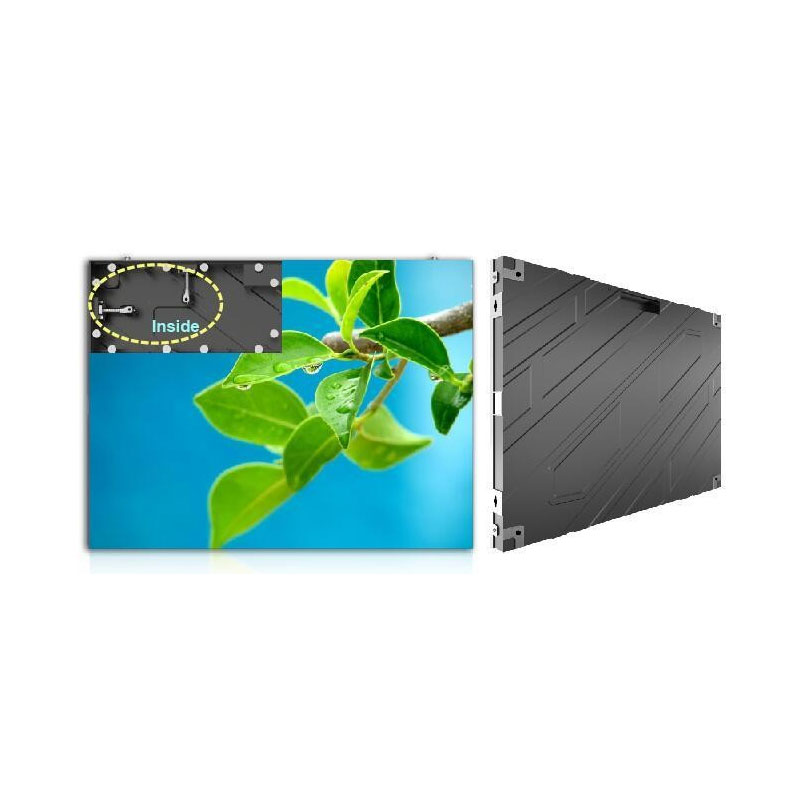
How Is a Fine-Pitch LED Display Constructed?
A fine-pitch LED display typically consists of several integrated components:
- LED chips: Generate the light required to create images and colors.
- LED modules: Arrange individual pixels into compact display units.
- Cabinets: Hold and align modules to form a larger screen.
- Driving ICs: Control LED brightness and image signals.
- Receiving cards: Process incoming video information and distribute display data.
- Power supply systems: Provide stable electrical power to the display.
- Control systems: Manage image input, resolution, configuration, and display operation.
These components work together to produce a unified image across multiple LED modules and cabinets. Their compatibility and manufacturing quality have a direct influence on display stability and visual consistency.
2. Why Pixel Pitch Matters for High-Definition Visual Performance
Pixel pitch is one of the most important specifications when selecting an LED display because it affects image density, suitable viewing distance, and the level of detail that can be presented comfortably.
When individual pixels are positioned closer together, the screen can reproduce finer visual information. This is particularly important for applications involving small text, complex diagrams, detailed maps, and multi-window monitoring systems.
Higher Pixel Density for More Detailed Images
A P1.25 LED screen contains approximately 640,000 pixels per square meter when using a square pixel arrangement. This high density helps create a more continuous image, reducing the visibility of individual pixels at appropriate viewing distances.
For businesses that frequently display technical drawings, financial data, or professional video content, this level of detail can improve the overall viewing experience.
More Suitable for Close-Range Viewing
Large-pitch LED displays can reveal visible gaps between pixels when viewed from nearby positions. Fine-pitch technology reduces this effect, making the screen more appropriate for meeting rooms, control centers, and indoor presentation environments.
Practical consideration: A commonly used preliminary viewing-distance estimate for a P1.25 LED display is around 1.25 meters, but this is not a universal minimum. Actual comfortable viewing distance depends on content, visual acuity, display calibration, and the intended application.
Improved Presentation of Text and Graphics
For professional environments, display quality is not only about video playback. It also involves how clearly the screen presents:
- Small text and numerical information.
- Detailed engineering diagrams.
- Financial charts and business dashboards.
- Multiple surveillance video feeds.
- High-resolution photographs and product images.
- Computer-generated graphics and presentations.
With appropriate input resolution and content scaling, P1.25 technology can help maintain clear and professional visual output across these different content types.
3. Key Advantages of a P1.25 LED Display
Choosing a fine-pitch LED display can provide several practical benefits for organizations that require high-quality indoor visual communication.
3.1 High-Definition Image Presentation
The most recognizable advantage is its high pixel density. The compact pixel arrangement supports detailed image reproduction, helping users view text, graphics, and video content with greater clarity at relatively short distances.
3.2 Seamless Large-Screen Viewing
LED displays are assembled from multiple modules and cabinets. When properly manufactured and installed, they can create a large visual surface without the prominent physical bezels associated with many conventional display solutions.
This is useful for conference rooms, command centers, and commercial spaces where uninterrupted visual presentation is important.
3.3 Flexible Screen Dimensions
Modular construction allows screen dimensions to be configured according to the available installation area and project requirements. Businesses can create different screen shapes and sizes by combining compatible cabinets.
This flexibility is particularly valuable for custom indoor display projects with specific architectural or functional requirements.
3.4 Consistent Color Performance
Color consistency is essential when displaying corporate branding, product images, and professional video content. Quality LED modules, suitable driving systems, and factory calibration can help reduce noticeable differences between neighboring modules.
For large installations, calibration and color management should be considered during both manufacturing and commissioning.
3.5 Long-Term Operational Value
LED display systems are designed for repeated professional use. With suitable operating conditions, effective thermal management, and regular maintenance, a quality display can support long-term operation.
However, actual service life depends on LED component quality, operating brightness, temperature, installation conditions, and maintenance practices. Buyers should evaluate warranty terms and available replacement components rather than relying solely on advertised lifespan figures.
4. Where P1.25 Fine-Pitch LED Displays Are Used
The combination of high pixel density and modular installation makes P1.25 LED displays suitable for various professional indoor environments.
4.1 Corporate Conference Rooms
Modern conference rooms require clear presentations for participants sitting at different distances from the screen. A P1.25 LED display can present business reports, video conferences, product demonstrations, and presentations with detailed visual information.
It can also serve as a central display solution in executive meeting rooms where professional appearance and presentation quality are important.
4.2 Command and Control Centers
Control rooms often need to display several information sources simultaneously. These may include monitoring interfaces, geographic information, operational dashboards, and real-time video feeds.
Fine-pitch LED technology supports detailed content presentation, helping operators review multiple visual elements on a large display surface.
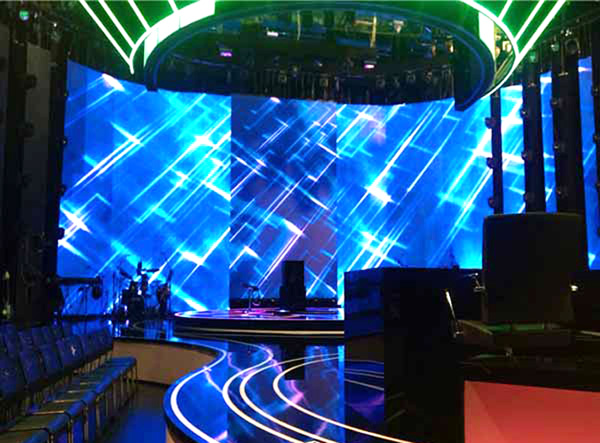
4.3 Broadcasting and Television Studios
Broadcasting environments require displays capable of presenting detailed graphics, background visuals, and video content. Fine-pitch LED screens can be used as studio backgrounds, virtual production elements, and information displays, provided the selected products meet the project's camera-related requirements.
For camera-facing applications, buyers should also evaluate refresh rate, grayscale performance, scan configuration, and potential moiré effects.
4.4 Retail and Commercial Spaces
Premium retail stores, shopping centers, exhibition halls, and brand showrooms use digital displays to communicate product information and promotional messages.
A P1.25 LED display can help create visually attractive indoor installations where customers may view content from relatively close distances.
4.5 Education and Training Facilities
Universities, training centers, and professional education facilities can use fine-pitch LED screens to present teaching materials, technical illustrations, videos, and interactive learning content.
Detailed visual output is particularly helpful when educational materials contain diagrams, small labels, or complex data.
5. Important Technical Specifications to Evaluate
Pixel pitch is important, but it should never be the only factor considered when purchasing a professional LED display. Several other specifications determine whether a product can meet the requirements of a particular project.
| Specification | What It Means | Why It Matters |
|---|---|---|
| Pixel Pitch | Distance between adjacent pixel centers | Determines pixel density and image detail |
| Brightness | Light output measured in nits or cd/m² | Affects visibility under different lighting conditions |
| Refresh Rate | Frequency at which the display refreshes image information | Important for motion presentation and camera applications |
| Grayscale Performance | Ability to reproduce different brightness levels | Influences image transitions and dark-area detail |
| Viewing Angle | Angle from which the image remains acceptably visible | Important for audiences positioned across a wide area |
| Contrast Ratio | Difference between bright and dark image areas | Influences perceived image depth and clarity |
| Cabinet Design | Physical structure and module arrangement | Affects installation accuracy and maintenance |
| Maintenance Method | Front or rear servicing arrangement | Determines accessibility during repairs |
| Power Consumption | Electrical energy required during operation | Influences operating costs and power planning |
Brightness and Indoor Lighting Conditions
Brightness should be selected according to the installation environment. An excessively bright screen in a dim conference room may cause visual discomfort, while insufficient brightness can reduce visibility in brightly illuminated commercial spaces.
For this reason, buyers should request the recommended brightness range and confirm whether brightness adjustment is supported.
Refresh Rate and Camera Compatibility
Refresh rate is especially important for broadcasting studios, virtual production environments, and applications involving professional cameras.
A higher refresh rate can help improve camera-facing performance, but it does not independently guarantee flicker-free footage. Camera shutter settings, scan mode, driving ICs, and grayscale performance must also be considered.
Color Uniformity and Calibration
Even a high-resolution screen may produce an unsatisfactory result if neighboring modules have inconsistent brightness or color output.
Buyers should ask about factory calibration, module binning, replacement-module matching, and on-site calibration services.
6. How to Choose the Right P1.25 LED Display
Selecting the right display requires a clear understanding of the intended application, installation environment, and long-term operating requirements. The following steps can help buyers make a more informed decision.
-
Define the application.
Determine whether the screen will be used in a conference room, control center, broadcast studio, retail environment, or another indoor setting. Different applications require different brightness, image-processing, and camera-performance specifications.
-
Calculate the screen dimensions.
Measure the available installation area and determine the required screen width and height. Check whether the cabinet configuration can achieve the desired dimensions and aspect ratio.
-
Evaluate viewing distance.
Identify the typical positions of viewers. Consider both the closest and farthest viewing points to ensure that the selected pixel pitch provides an appropriate visual experience.
-
Confirm the input resolution.
Check the resolution of the video sources, processors, and playback equipment. A high-density LED display still requires suitable source content and signal processing to deliver its full visual potential.
-
Review component quality.
Ask about LED brands, driving ICs, power supplies, receiving cards, and module construction. Component specifications can influence image stability, consistency, and maintenance requirements.
-
Check installation and maintenance requirements.
Confirm whether front maintenance, rear maintenance, or another servicing arrangement is available. Ensure that the installation structure provides sufficient support and access.
-
Compare warranty and technical support.
Review warranty coverage, spare parts availability, installation assistance, troubleshooting procedures, and after-sales service before placing an order.
Questions Buyers Should Ask Their LED Display Supplier
- What is the actual resolution of the proposed screen size?
- Which LED chips and driving ICs are used?
- What are the brightness, refresh rate, and grayscale specifications?
- Does the display support front maintenance?
- Can the screen be customized to the required dimensions?
- Are replacement modules available for future maintenance?
- What technical support is provided during installation and operation?
Purchasing tip: Request a complete technical specification sheet and a sample demonstration before confirming a large project order. Comparing actual display performance is more reliable than making a purchasing decision based on pixel pitch alone.
7. Installation and Maintenance Considerations
Proper installation and maintenance are essential for maintaining the performance of a fine-pitch LED display. Even a well-manufactured product can experience visual or operational problems if installation conditions are unsuitable.
Installation Requirements
Before installation, the project team should evaluate several factors:
- Structural support: Ensure that the mounting structure can safely support the total display weight.
- Electrical capacity: Confirm that the power distribution system meets the display's electrical requirements.
- Ventilation: Provide appropriate airflow and heat dissipation according to manufacturer recommendations.
- Signal transmission: Plan suitable signal cables, processors, and control equipment.
- Cabinet alignment: Ensure accurate cabinet positioning to minimize visible gaps and uneven surfaces.
- Environmental conditions: Maintain appropriate temperature and humidity levels for indoor operation.
Routine Maintenance Practices
Regular maintenance helps identify potential issues before they affect normal operation. Recommended practices include:
- Inspecting modules and cabinets for visible damage.
- Checking power connections and signal cables.
- Cleaning the display surface using manufacturer-approved methods.
- Monitoring abnormal temperature changes.
- Checking for dead pixels or color inconsistencies.
- Keeping spare modules and critical components available.
- Performing periodic brightness and color calibration when necessary.
Fine-pitch LED modules contain delicate electronic components. Avoid applying excessive pressure or using unsuitable cleaning chemicals. Always follow the manufacturer's maintenance instructions.
Why Spare Parts and After-Sales Support Matter
For commercial and industrial installations, display downtime can interrupt business presentations, monitoring activities, and customer communication.
Reliable access to compatible replacement modules, power supplies, receiving cards, and technical assistance can make a significant difference in long-term project management.
8. P1.25 LED Display vs. Other Pixel Pitch Options
Different pixel pitches are designed for different viewing environments and project budgets. Understanding the differences helps buyers avoid selecting a screen that is either insufficient for the application or unnecessarily expensive.
| Pixel Pitch | Pixel Density per m² | Typical Application Considerations |
|---|---|---|
| P0.9 | Approximately 1,234,568 | Ultra-fine-pitch applications requiring very high pixel density |
| P1.25 | Approximately 640,000 | Premium indoor displays and relatively close viewing distances |
| P1.5 | Approximately 444,444 | Indoor professional displays with slightly greater pixel spacing |
| P1.8 | Approximately 308,642 | Meeting rooms, commercial displays, and indoor installations |
| P2.0 | Approximately 250,000 | Indoor screens with moderate viewing-distance requirements |
Note: Pixel densities are approximate theoretical values based on a square pixel arrangement. Actual product specifications may vary.
When Is P1.25 a Suitable Choice?
P1.25 can be a suitable option when:
- Viewers need to observe detailed content at relatively short distances.
- The application involves small text, charts, or complex graphics.
- A premium indoor visual experience is required.
- The project needs a modular large-format LED screen.
- Image detail is a higher priority than minimizing initial equipment cost.
Is a Smaller Pixel Pitch Always Better?
Not necessarily. Although a smaller pixel pitch provides greater pixel density, it also generally increases the number of pixels, electronic components, and manufacturing requirements per unit area.
For installations viewed from farther away, a larger pixel pitch may deliver satisfactory visual performance at a more economical project cost.
The most effective solution is the one that balances image quality, viewing distance, installation conditions, and total project budget.
9. Common Purchasing Mistakes and How to Avoid Them
Buyers sometimes focus too heavily on a single technical specification and overlook other factors that influence the complete display system.
Mistake 1: Choosing Only by Pixel Pitch
A P1.25 specification does not automatically guarantee superior image quality. LED chip quality, calibration, driving technology, and module consistency also matter.
Better approach: Evaluate the complete technical configuration and request a real product demonstration.
Mistake 2: Ignoring the Viewing Environment
A display designed for a dim conference room may not perform optimally in a brightly illuminated commercial environment.
Better approach: Confirm ambient lighting conditions and select suitable brightness specifications before ordering.
Mistake 3: Overlooking Signal Compatibility
Even a high-quality LED screen cannot display content correctly if the video processor, input source, or signal transmission system is incompatible.
Better approach: Confirm resolution, input interfaces, processor capacity, and control software compatibility.
Mistake 4: Neglecting Maintenance Accessibility
Limited maintenance access can increase repair time and complicate future component replacement.
Better approach: Discuss installation space, front or rear maintenance options, and spare parts availability in advance.
Mistake 5: Comparing Suppliers Only by Price
Two LED displays with the same pixel pitch may use different components, cabinet structures, control systems, and quality-control processes.
Better approach: Compare detailed specifications, product consistency, warranty coverage, and technical support instead of relying only on the quoted price.
10. Future Trends in Fine-Pitch LED Display Technology
Fine-pitch LED display technology continues to develop as businesses demand higher image quality, more flexible installations, and improved operational efficiency.
Mini LED and Advanced Packaging Technologies
Mini LED technology and advanced packaging methods are helping manufacturers develop increasingly compact LED display solutions. These developments support higher pixel densities and improved integration for professional indoor applications.
Improved Energy Efficiency
Power efficiency remains an important consideration for large display installations. Improvements in LED chips, driving ICs, power management, and control technologies can help reduce energy consumption while maintaining suitable image performance.
Smarter Display Control Systems
Modern display control systems increasingly support more convenient content management, remote monitoring, signal distribution, and system diagnostics. These functions can simplify daily operation and help technical teams identify potential issues.
Greater Customization Flexibility
Businesses increasingly require displays that fit specific architectural spaces and application requirements. Modular cabinets, flexible installation configurations, and customized screen dimensions are therefore important considerations in professional LED display projects.
As these technologies evolve, buyers should focus on practical performance, system compatibility, and long-term serviceability rather than selecting products based only on emerging technical terminology.
11. Frequently Asked Questions
Q1: What does P1.25 mean in an LED display?
P1.25 means the distance between the centers of two adjacent pixels is 1.25 millimeters. This compact spacing creates high pixel density and supports detailed image presentation at relatively short viewing distances.
Q2: What is the pixel density of a P1.25 LED display?
A P1.25 LED display has an approximate pixel density of 640,000 pixels per square meter, assuming a square pixel arrangement. The actual resolution depends on the physical screen dimensions and product configuration.
Q3: What is the recommended viewing distance for a P1.25 LED screen?
A preliminary viewing-distance estimate is approximately 1.25 meters. However, the best viewing distance depends on the displayed content, viewer requirements, image quality, and installation environment.
Q4: Is a P1.25 LED display suitable for conference rooms?
Yes. Its high pixel density makes it suitable for professional conference rooms where participants need to view presentations, text, charts, and video content from relatively close distances.
Q5: Can a P1.25 LED display be used in a control room?
Yes. It can be used in control rooms that require detailed information presentation, including monitoring dashboards, maps, data visualizations, and multiple video feeds. The final configuration should match the operational and viewing requirements.
Q6: What is the difference between P1.25 and P1.5 LED displays?
P1.25 has a smaller pixel pitch and higher pixel density than P1.5. It can provide more image detail at comparable screen dimensions, while P1.5 may offer a more economical solution when extremely high pixel density is not essential.
Q7: Does a P1.25 LED display support front maintenance?
Some P1.25 LED display models support front maintenance, allowing technicians to access modules from the front of the screen. However, this depends on the cabinet and module design. Buyers should confirm the maintenance configuration with the manufacturer.
Q8: What factors affect the service life of a P1.25 LED display?
Service life is influenced by LED chip quality, operating brightness, temperature, ventilation, electrical stability, installation conditions, and maintenance practices. Following manufacturer guidelines can help maintain stable operation.
Q9: How do I choose a reliable P1.25 LED display manufacturer?
Evaluate the manufacturer's production capabilities, component sourcing, quality-control procedures, technical documentation, customization options, warranty terms, and after-sales support. Request product samples or demonstrations when possible.
Q10: What information should I provide when requesting a P1.25 LED display quotation?
Provide the required screen width and height, installation environment, viewing distance, intended application, preferred maintenance method, input source requirements, and destination market. These details help the supplier recommend a suitable configuration and prepare a more accurate quotation.
12. Final Thoughts: Making the Right Investment in Fine-Pitch LED Technology
A P1.25 Fine-Pitch High-Definition LED Display offers a practical solution for professional environments that demand detailed images, high pixel density, and flexible large-screen configurations. Its compact pixel spacing makes it particularly valuable for conference rooms, command centers, broadcasting studios, and premium indoor commercial applications.
However, choosing the right display requires a comprehensive evaluation of more than pixel pitch. Brightness, refresh rate, grayscale performance, color uniformity, cabinet design, signal compatibility, maintenance accessibility, and technical support all contribute to the overall project outcome.
For buyers, working with an experienced LED display manufacturer can simplify product selection, technical evaluation, customization, and project implementation. A carefully selected display system can provide consistent visual performance and support professional communication for years to come.
Looking for a Reliable P1.25 Fine-Pitch LED Display Supplier?
ShenZhen Allenson Photoelectric Co., Ltd is committed to providing professional LED display solutions for diverse visual application requirements.
Whether you are planning a corporate display installation, a control room project, or a customized indoor LED screen, selecting the right product configuration is essential to achieving your goals.
Contact our team today to discuss your project requirements, request product specifications, and explore suitable P1.25 Fine-Pitch High-Definition LED Display solutions.
Contact UsRelated News
- Don't Just Buy Any Advertising All-in-One! Understand These Key Selection Tips First
- What protective features should outdoor sports field displays have?
- In which scenarios are all-in-one digital signage displays suitable for use?
- What common pitfalls should you avoid when purchasing indoor fine-pitch displays?
- High-Quality Conference Displays: How to Choose an Indoor LED Display?
- What are the advantages of purchasing outdoor LED displays directly from the manufacturer?
Leave me a message


News Recommendations