English
- English
- Español
- Português
- русский
- Français
- 日本語
- Deutsch
- tiếng Việt
- Italiano
- Nederlands
- ภาษาไทย
- Polski
- 한국어
- Svenska
- magyar
- Malay
- বাংলা ভাষার
- Dansk
- Suomi
- العربية
- हिन्दी
- Pilipino
- Türkçe
- Gaeilge
- Indonesia
- Norsk
- تمل
- český
- ελληνικά
- український
- Javanese
- فارسی
- தமிழ்
- తెలుగు
- नेपाली
- Burmese
- български
- ລາວ
- Latine
- Қазақша
- Euskal
- Azərbaycan
- Slovenský jazyk
- Македонски
- Lietuvos
- Eesti Keel
- Română
- Slovenski
- मराठी
- Srpski језик

News
Can stage LED Floor Tile Display interactive sensing without delay?
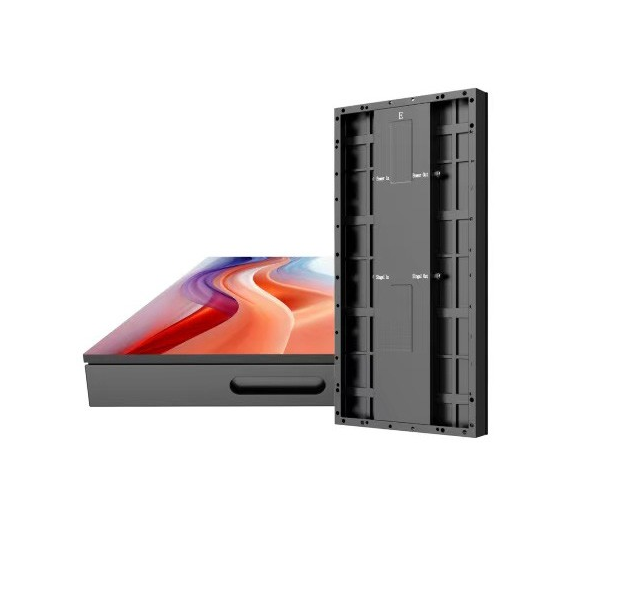
In stage performances, the audience's pursuit of immersive experiences drives continuous technological innovation. As the core visual medium for stage displays, interactive LED Floor Tile Display have evolved from conceptual demonstrations to practical applications—performers triggering light effects with their footsteps, audience gestures altering screen colors. These scenarios rely entirely on the tiles' precise motion capture and real-time feedback capabilities. However, latency issues directly impact the experience: if there's noticeable delay between actions and screen responses, the fluidity and realism of interactions suffer significantly. So how do stage LED Floor Tile Display balance interactive sensing with low latency? What are the technical implementation paths and actual effects?

The core of interactive sensing lies in the closed-loop process of “perception-transmission-feedback,” and the sensor configuration of LED Floor Tile Display marks the starting point of this loop. Take pressure sensing as an example: when a performer steps on the LED Floor Tile Display , the built-in pressure sensors must capture signals within milliseconds. This process involves converting pressure changes into electrical signals, digitizing them via an analog-to-digital converter, and finally transmitting the data to the main control system. In practical engineering, LED Floor Tile Display typically operate at a sampling rate of 200-300Hz, which adequately covers most stage movements while maintaining efficiency. For instance, LED Floor Tile Display used in a large-scale musical stage employ a pressure sensor array for simultaneous multi-point sensing, ensuring precise capture of every movement during group dances.
Delay control in data transmission requires balancing hardware and protocol considerations, with the transmission solution directly impacting efficiency. Hardware-wise, wired transmission is the preferred option for LED Floor Tile Display due to its strong anti-interference capabilities and stable bandwidth—typically achieving latency below 2ms within 30 meters. Wireless transmission requires optimized frequency band and channel allocation, with measured latency compressible to under 5ms, though stability is slightly lower.
The processing power of the master control system is critical for low latency, and the design of LED floor tile master controllers must meet high-concurrency, low-latency demands. Upon receiving sensor data, three steps are required: coordinate mapping, motion recognition, and special effect triggering. Hardware-wise, FPGAs leverage parallel computing to process sensor data from multiple LED Floor Tile Display simultaneously, with single-chip latency controlled under 1ms. Algorithmically, lightweight neural networks enable real-time motion recognition on edge devices, bypassing cloud upload delays.
Display synchronization must ensure visual updates align with motion feedback, and the synchronization technology of LED Floor Tile Display directly impacts visual continuity. Screen refresh rates must match sensor sampling rates: if sensors sample at 200Hz, selecting 120Hz or 144Hz screens prevents stuttering. Regarding synchronization protocols, traditional solutions rely on the master controller uniformly sending commands, which is prone to desynchronization due to transmission delays. The improved solution employs “distributed synchronization”—the master controller only sends timestamps, while each tile screen autonomously calculates the current frame, achieving a synchronized accuracy of 0.1ms in real-world testing. For example, during a New Year's Eve gala featuring 36 LED Floor Tile Display , distributed synchronization ensured continuous visuals during rapid movements without tearing or misalignment. Even when performers sprinted from one stage side to the other, lighting effects remained perfectly synchronized with their footsteps.
Practical applications require balancing parameters with scene requirements, necessitating flexible configuration adjustments for LED Floor Tile Display based on stage types. Children's theater stages feature smaller, slower movements, allowing for lower-cost infrared sensors + wired transmission with total latency controlled under 8ms. For instance, an 8-tile LED floor system in a children's theater uses infrared sensing for simple interactions tailored to young audiences. For dance performances with large movements and high speeds, pressure sensors (250Hz sampling) + FPGA controllers + 144Hz screens are required, compressing total latency to under 5ms. For instance, a contemporary dance production utilized 24 LED Floor Tile Displays to enable real-time lighting effects during dancers' rapid spins.
In summary, achieving zero-latency interaction with stage LED Floor Tile Displays fundamentally relies on the synergistic optimization of hardware, algorithms, and protocols. From high-precision sensor sampling to low-latency transmission protocols, and from parallel processing in the control system to precise synchronization of display output—every detail directly impacts the final performance of LED Floor Tile Displays. With the widespread adoption of 5G and edge computing, future LED Floor Tile Displays are poised to achieve even lower interaction latency, delivering more authentic immersive experiences for audiences.
Related News
- What are the advantages of purchasing outdoor LED displays directly from the manufacturer?
- How to Choose a Manufacturer for Stadium LED Displays: Key Tips for Avoiding Pitfalls in Project Procurement?
- How Do Stadium LED Displays Balance Viewing Quality and Durability?
- How to Choose an LED Floor Tile Display for Stage Interactions?
- What advantages can you gain by purchasing flexible LED displays directly from the manufacturer?
- What Makes Antibacterial Toilet Bowl Cleaner Essential for a Hygienic Bathroom?
Leave me a message