English
- English
- Español
- Português
- русский
- Français
- 日本語
- Deutsch
- tiếng Việt
- Italiano
- Nederlands
- ภาษาไทย
- Polski
- 한국어
- Svenska
- magyar
- Malay
- বাংলা ভাষার
- Dansk
- Suomi
- العربية
- हिन्दी
- Pilipino
- Türkçe
- Gaeilge
- Indonesia
- Norsk
- تمل
- český
- ελληνικά
- український
- Javanese
- فارسی
- தமிழ்
- తెలుగు
- नेपाली
- Burmese
- български
- ລາວ
- Latine
- Қазақша
- Euskal
- Azərbaycan
- Slovenský jazyk
- Македонски
- Lietuvos
- Eesti Keel
- Română
- Slovenski
- मराठी
- Srpski језик

News
How to Choose a High-Definition Indoor Large-Screen Display? A Comprehensive Guide to Selecting LED Display for Various Applications
When purchasing indoor LED displays, many customers tend to fall into common pitfalls: blindly pursuing the smallest pixel pitch and highest specifications, or focusing solely on low prices while neglecting compatibility. This often results in issues such as a grainy appearance up close, wasted image quality when viewed from a distance, and rippling effects in photos. The key to selecting an indoor LED display lies not in chasing extreme specifications, but in considering four core factors: viewing distance, application scenario, functional requirements, and budget. This article compiles a comprehensive guide to selecting indoor LED displays, tailored to various commercial indoor scenarios to help you avoid common pitfalls.
I. Select Pixel Pitch Based on Viewing Distance; Avoid Blindly Opting for High or Low Specs
The smaller the P-value (pixel pitch) of an LED display, the finer the image quality, the higher the price, and the closer the minimum viewing distance. Choose the option that offers the best value for your specific needs. For ultra-close viewing scenarios within 2 meters, prioritize ultra-high-definition small-pitch screens such as P1.25 and P1.667. These offer grain-free, fine-detail images at close range and are suitable for high-end settings. For standard close-range viewing at 2–3 meters, P1.8 and P2 models offer the best value and are the mainstream choices for corporate conference rooms and small exhibition halls. For medium-range viewing at 3–5 meters, P2.5 and P3 specifications are recommended; they provide clear images at a lower cost and are suitable for lecture halls, lobbies, and medium-sized exhibition halls. For long-range viewing scenarios beyond 5 meters, there is no need for fine-pitch displays—P3 and P4 models can fully meet visual requirements, helping you avoid wasting your budget.
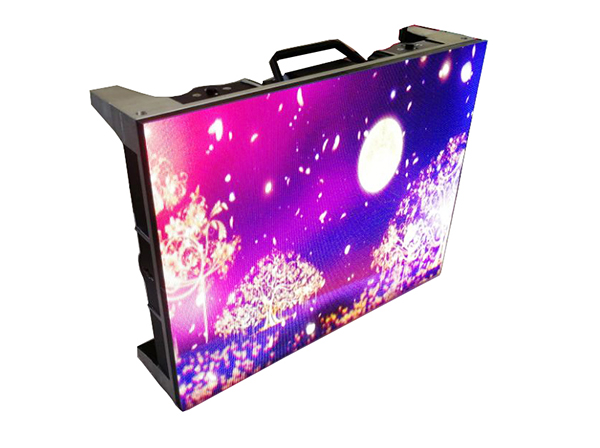
II. Selecting the Right Model for Specific Applications
Conference Rooms and Lecture Halls: The core requirements are clear text and flicker-free video capture; prioritize P1.667–P2 fine-pitch LED displays. High refresh rates support video conferencing and live streaming, replacing traditional projectors. These displays are unaffected by indoor lighting interference, maintain stable images without washing out, and are suitable for routine meetings in government and corporate settings.
Exhibition Halls, Corporate Lobbies, and Brand Display Walls: Emphasis is placed on display effects and aesthetics, with a focus on fine image detail and vibrant, transparent colors. Models with pixel pitches of P1.8–P2.5 are recommended. These screens can play corporate promotional videos and product content. Supporting seamless splicing and custom shapes, they enhance the space’s high-tech ambiance and are suitable for brand展示 and client reception scenarios.
Command Centers and Monitoring/Dispatch Rooms: These environments require long-term standby, multi-signal split-screen display, and high-definition data visualization. High-end small-pitch screens with pixel pitches of P1.25–P1.667 are the top choice. With high contrast, low brightness, and high gray levels, they ensure clear layering in data charts and monitoring footage, providing stable 7×24-hour operation to meet professional dispatch requirements.
Stages and Indoor Event Rental Scenarios: Emphasizing easy assembly and disassembly along with uniform color reproduction—without the need for extreme high definition—P2.5 and P3 die-cast aluminum rental screens are the most suitable. Their quick-lock structure enables efficient setup and takedown, supports repeated reuse, and is ideal for roadshows, annual meetings, and small-scale performances.
III. Avoiding Pitfalls in Selection: Three Key Parameters You Can’t Ignore
First, consider the refresh rate. For indoor photography scenarios, be sure to choose a screen with a high refresh rate of ≥1920 Hz to eliminate rippling effects in photos and videos; for standard display scenarios, a conventional refresh rate is sufficient. Second, consider brightness. The optimal standard brightness for indoor use is 800–1000 cd/m²; screens that are too bright are glaring, while those that are too dim appear washed out. The ideal brightness should suit a soft indoor lighting environment. Finally, consider build quality. Prioritize die-cast aluminum enclosures, which offer high flatness, seamless splicing, resistance to deformation, simple maintenance, and a lower failure rate.
In summary, choose small-pitch LED displays for high-end close-range scenarios; opt for cost-effective P2/P2.5 LED displays for standard office settings; select medium-to-large-pitch displays for long-distance presentations; and choose quick-installation rental screens for event rentals. There’s no need to blindly prioritize high specifications; the optimal indoor LED display solution is one that aligns with the application scenario, viewing distance, and budget. As a direct manufacturer, Allenson offers free one-on-one product selection guidance, custom sizing, and on-site survey services. Our entire line of indoor displays undergoes strict quality control and comes with comprehensive after-sales support, making them suitable for a wide range of commercial indoor large-screen projects.
Related News
- What are the advantages of purchasing outdoor LED displays directly from the manufacturer?
- How to Choose a Manufacturer for Stadium LED Displays: Key Tips for Avoiding Pitfalls in Project Procurement?
- How Do Stadium LED Displays Balance Viewing Quality and Durability?
- How to Choose an LED Floor Tile Display for Stage Interactions?
- What advantages can you gain by purchasing flexible LED displays directly from the manufacturer?
- What Makes Antibacterial Toilet Bowl Cleaner Essential for a Hygienic Bathroom?
Leave me a message