English
- English
- Español
- Português
- русский
- Français
- 日本語
- Deutsch
- tiếng Việt
- Italiano
- Nederlands
- ภาษาไทย
- Polski
- 한국어
- Svenska
- magyar
- Malay
- বাংলা ভাষার
- Dansk
- Suomi
- العربية
- हिन्दी
- Pilipino
- Türkçe
- Gaeilge
- Indonesia
- Norsk
- تمل
- český
- ελληνικά
- український
- Javanese
- فارسی
- தமிழ்
- తెలుగు
- नेपाली
- Burmese
- български
- ລາວ
- Latine
- Қазақша
- Euskal
- Azərbaycan
- Slovenský jazyk
- Македонски
- Lietuvos
- Eesti Keel
- Română
- Slovenski
- मराठी
- Srpski језик

News
Are LED displays for stadiums cost-effective?
In the modernization of sports venues, LED displays have become indispensable core equipment. They not only handle fundamental functions like live event broadcasts and score displays but also serve as key platforms for enhancing spectator experiences and generating commercial value. However, faced with a vast array of products and varying prices in the market, stadium operators often grapple with a central question: What is the true cost-effectiveness of LED displays? Is the high investment justified? This article comprehensively analyzes the cost-effectiveness of stadium LED displays from dimensions including technical performance, cost efficiency, and scenario adaptability, providing scientific reference for decision-making.

I. Technical Performance Meets Core Stadium Requirements
High Brightness and Clarity: Stadium LED displays must meet long-distance viewing requirements. Models like P2.5-P3, specifically designed for stadiums, achieve brightness exceeding 5000 nits, ensuring clear visibility even under direct sunlight. Unilumin Technology's LED displays for the 2024 UEFA European Championship transition from 4K to 8K resolution, significantly enhancing the spectator experience.
High Refresh Rate and Low Latency: Sports events feature highly dynamic visuals, requiring LED displays with refresh rates exceeding 3840Hz to eliminate motion blur. For instance, the Aurora King DIP570 LED display achieves a 3840Hz refresh rate, enabling real-time rendering of fast-moving action.
Protective Performance: Stadium environments are complex, demanding LED displays with waterproof, dustproof, and impact-resistant capabilities. P2.5-P3 models achieve IP65 protection, withstanding rain and snow. UV-resistant materials prevent aging from ultraviolet rays, extending service life.
II. Cost-Benefit Analysis
Initial Investment: Stadium LED display pricing varies by model and specifications. P2.5-P3 models start at approximately ¥16,000 per square meter, with high refresh rate functionality adding an extra ¥3,000. For a 50-square-meter installation in a stadium, the initial investment ranges from approximately ¥800,000 to ¥950,000.
Long-Term Operating Costs:
Energy Consumption: Energy-efficient products compliant with major city power consumption regulations may cost 5%-8% more upfront but reduce electricity expenses over time. For instance, Aurora King DIP570 LED displays consume over 30% less energy than traditional products while achieving equivalent brightness.
Maintenance: LED displays boast lifespans exceeding 100,000 hours with low failure rates. For instance, Lianjian Optoelectronics' P3 full-color indoor screen guarantees a dead pixel rate below 0.005% during its three-year warranty period, minimizing long-term maintenance costs.
Upgrades: Modular designs enable rapid maintenance and upgrades, further reducing ongoing operational expenses.
III. Cost-Performance Ratios Across Different Scenarios
High-End Sporting Events: For major tournaments like the World Cup or Olympics, LED displays must meet exceptionally high performance standards. While premium brands (e.g., Leyard, Unilumin) require higher initial investment, they guarantee broadcast quality and elevate stadium branding, delivering significant long-term returns.
Daily Training and Small-Scale Events: With relatively lower performance demands, mid-range brands offering better cost-performance ratios (e.g., Huabangying, Qiangli Jucai) are suitable. For instance, Huabangying's P2.5 product consistently demonstrates excellent brightness and chromatic uniformity in third-party evaluations, priced 20%-30% lower than traditional brands.
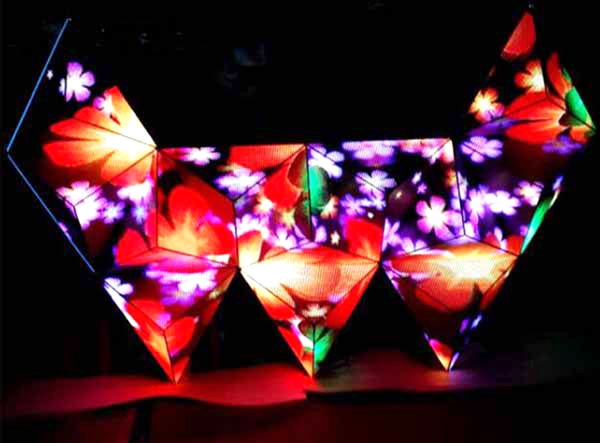
Multi-purpose stadiums: Requiring flexibility for events, performances, and exhibitions, LED displays must offer high adaptability and scalability. Curved/cylindrical screens enhance audience experience but cost over 40% more than flat panels. Performance and cost must be balanced based on actual requirements.
IV. Recommendations for Optimizing Cost-Effectiveness
Define Requirements: Select appropriate LED display models and specifications based on stadium size, event types, and budget. For instance, small stadiums can use P5-P6 models priced at 4,000-5,500 RMB/m², meeting basic needs.
Confirm After-Sales Service: This includes on-site installation and commissioning, warranty periods, and response times. For instance, Leyard offers a three-year warranty with key components covered for five years, reducing long-term maintenance costs.
Leverage Policy Incentives: Energy-efficient products compliant with first-tier city power consumption regulations may carry higher upfront costs but qualify for government subsidies or tax breaks, lowering initial investment.
In summary, the cost-effectiveness of stadium LED displays cannot be measured by a single metric. It represents a dynamic equilibrium between technical performance, long-term costs, and specific application requirements. For high-end competition venues, selecting high-brightness, high-refresh-rate, long-lifespan LED displays may involve higher initial investment but delivers long-term returns by enhancing spectator experience and expanding commercial value. For daily training or smaller venues, mid-range products meet basic requirements at lower costs. Ultimately, clarifying requirements, focusing on core components, and prioritizing after-sales service are key pathways to enhancing cost-effectiveness.
Related News
- What are the advantages of purchasing outdoor LED displays directly from the manufacturer?
- How to Choose a Manufacturer for Stadium LED Displays: Key Tips for Avoiding Pitfalls in Project Procurement?
- How Do Stadium LED Displays Balance Viewing Quality and Durability?
- How to Choose an LED Floor Tile Display for Stage Interactions?
- What advantages can you gain by purchasing flexible LED displays directly from the manufacturer?
- What Makes Antibacterial Toilet Bowl Cleaner Essential for a Hygienic Bathroom?
Leave me a message