English
- English
- Español
- Português
- русский
- Français
- 日本語
- Deutsch
- tiếng Việt
- Italiano
- Nederlands
- ภาษาไทย
- Polski
- 한국어
- Svenska
- magyar
- Malay
- বাংলা ভাষার
- Dansk
- Suomi
- العربية
- हिन्दी
- Pilipino
- Türkçe
- Gaeilge
- Indonesia
- Norsk
- تمل
- český
- ελληνικά
- український
- Javanese
- فارسی
- தமிழ்
- తెలుగు
- नेपाली
- Burmese
- български
- ລາວ
- Latine
- Қазақша
- Euskal
- Azərbaycan
- Slovenský jazyk
- Македонски
- Lietuvos
- Eesti Keel
- Română
- Slovenski
- मराठी
- Srpski језик

News
Can circular LED displays be used for both commercial advertising and sports venues?
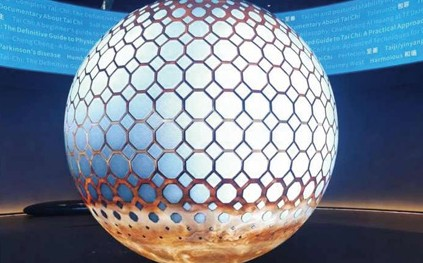
Circular LED displays are achieving large-scale adoption in commercial advertising and sports venues thanks to their unique geometric form and modular technology. Their core value lies in addressing coverage blind spots inherent to traditional rectangular screens through form innovation, while simultaneously meeting the functional demands of both application scenarios. Let's explore this in detail with ALSON.

Commercial Advertising Scenarios: The modular design of circular LED displays supports free assembly ranging from 1 to 30 meters in diameter, adapting to diverse spatial scales. For instance, an automotive brand deployed an 8-meter circular display in an auto show atrium. By synchronizing 48 independent modules, it showcased a 360-degree dynamic model of a new vehicle, delivering distortion-free viewing experiences from any angle. For outdoor applications, its wind-resistant structure utilizes a honeycomb aluminum skeleton. A circular display on a city landmark building maintained stable visuals during a Category 12 typhoon, with a 60% lower failure rate compared to traditional rectangular screens.
In terms of content presentation, circular LED displays support split-screen display and intelligent light control. A circular display in the atrium of a Beijing shopping mall divides its screen into eight zones, simultaneously showing brand advertisements, floor navigation, and event information. Its intelligent dimming system automatically adjusts brightness based on ambient light intensity, maintaining 8000 cd/m² brightness outdoors on sunny days and reducing to 500 cd/m² in dim indoor environments to prevent light pollution.
Sports Venue Scenarios: Sports settings demand higher levels of real-time responsiveness and interactivity. A 12-meter circular screen deployed at the center circle of an NBA team's home court incorporates sensors that capture vibration data from basketball impacts on the floor. This data is instantly converted into ripple effects on the screen, enhancing the immersive game experience. In esports arenas, a circular screen integrated with AR technology triggers virtual explosion effects when players execute critical maneuvers. These effects synchronize with seat vibrations and lighting, boosting audience engagement.
Multi-screen collaborative management is another core requirement. At a Qatar World Cup venue, 20 circular screens deployed around the center circle and spectator seating areas utilize a distributed control system for synchronized or zoned content display: real-time footage during gameplay, close-ups on center screens during breaks, and advertisements or interactive games on spectator screens.
Technical Support
The versatility of circular LED displays stems from three technological breakthroughs:
Curved Assembly: Utilizing flexible PCB boards and hinge structures enables curved installations with a minimum bending radius of 0.5 meters.
Intelligent Calibration: Real-time camera monitoring detects image distortion, automatically adjusting pixel alignment to ensure distortion-free curved displays.
Environmental Adaptability: IP65-rated protection offers dust and water resistance, with an operating temperature range of -30°C to 60°C, making it suitable for extreme outdoor conditions.
Overall, circular LED displays integrate modular design, intelligent control, and environmental adaptation technologies to simultaneously fulfill creative advertising demands in commercial settings and real-time interactive requirements in sports venues. Their application boundaries are expanding with technological advancements—future innovations like transparent displays and flexible materials may further integrate them into smart cities and retail spaces, positioning them as key components in digital interface upgrades.
Related News
- What are the advantages of purchasing outdoor LED displays directly from the manufacturer?
- How to Choose a Manufacturer for Stadium LED Displays: Key Tips for Avoiding Pitfalls in Project Procurement?
- How Do Stadium LED Displays Balance Viewing Quality and Durability?
- How to Choose an LED Floor Tile Display for Stage Interactions?
- What advantages can you gain by purchasing flexible LED displays directly from the manufacturer?
- What Makes Antibacterial Toilet Bowl Cleaner Essential for a Hygienic Bathroom?
Leave me a message