English
- English
- Español
- Português
- русский
- Français
- 日本語
- Deutsch
- tiếng Việt
- Italiano
- Nederlands
- ภาษาไทย
- Polski
- 한국어
- Svenska
- magyar
- Malay
- বাংলা ভাষার
- Dansk
- Suomi
- العربية
- हिन्दी
- Pilipino
- Türkçe
- Gaeilge
- Indonesia
- Norsk
- تمل
- český
- ελληνικά
- український
- Javanese
- فارسی
- தமிழ்
- తెలుగు
- नेपाली
- Burmese
- български
- ລາວ
- Latine
- Қазақша
- Euskal
- Azərbaycan
- Slovenský jazyk
- Македонски
- Lietuvos
- Eesti Keel
- Română
- Slovenski
- मराठी
- Srpski језик

News
What exactly is an LED irregular-shaped display? Why is it gaining popularity?
Traditional display technologies have long been constrained by rectangular frames, but the emergence of LED irregular-shaped displays has broken this limitation. It redefines the physical boundaries of display devices, fostering new interaction patterns across commercial, cultural, and urban spaces, and becoming a key medium connecting digital content with the physical world. Its core characteristics and reasons for popularity reflect the deep integration of technological advancement and scenario demands.

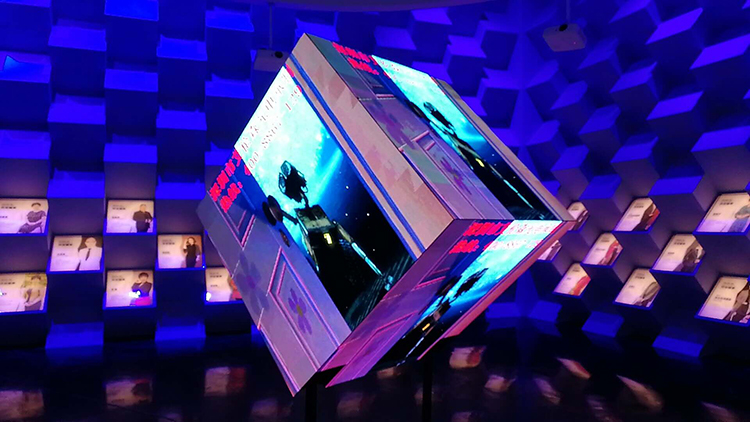
The core features of LED irregular-shaped displays center on form, technology, and scenario adaptability. In form, they transcend traditional rectangular constraints, customizable into complex structures like arcs, spheres, waves, cylinders, and triangles—even replicating architectural contours or natural forms. Examples include three-dimensional stage screens and spherical displays in mall atriums, where irregular designs extend visual experiences from flat planes into three-dimensional spaces. Technologically, flexible LED display modules provide the critical foundation. Module thickness can be reduced to 8.6 millimeters, with a maximum bending radius of 120 degrees, supporting dynamic transformations like folding, telescoping, and rotation. Combined with driving control algorithms and structural support systems, content precisely adapts to irregular screens, ensuring visual continuity. In terms of scenario adaptability, LED irregular-shaped displays can cover three-dimensional spaces like floors, ceilings, and walls, seamlessly integrating with architectural structures. Curved displays on subway pillars and triangular screens in storefronts efficiently utilize fragmented spaces through form adaptation, enabling precise delivery of information and advertising.
The rise of LED irregular-shaped display fundamentally stems from the synergistic drive of technology, demand, and ecosystem development. Mature technology lowers application barriers. Enhanced production efficiency for flexible modules and irregular structural components, coupled with improved integration capabilities, significantly shortens design and deployment cycles. Modular design further streamlines installation and maintenance. For instance, suspended irregular displays in mall atriums are deployed through modular assembly, boosting operational efficiency by over 30%. While initial customization costs exceed traditional screens, the long-term comprehensive cost advantages of LED irregular-shaped displays gradually emerge due to their energy efficiency, extended lifespan, and remote content update capabilities.
Commercial demand serves as another key driver. Consumers' pursuit of immersive experiences has prompted businesses to create differentiated scenarios using LED irregular-shaped displays. Museums employ spherical screens to simulate celestial movements, increasing visitor dwell time by 40%. Bars utilize irregular displays to project dynamic light shows, stimulating consumer desire. Precision marketing and data-driven capabilities further expand their application scope. LED irregular-shaped displays can integrate AI and big data to analyze audience behavior and automatically push tailored content. One shopping mall discovered through data analysis that female customers accounted for 70% of evening traffic. After adjusting beauty product advertisements, conversion rates increased by 25%. Additionally, LED irregular-shaped display enhance space utilization. In confined areas like subway pillars and storefront windows, curved or triangular screens efficiently utilize vertical surfaces to display real-time information and advertisements, reaching commuters and shoppers.
The fusion of creative expression and cultural value imbues LED irregular-shaped displays with deeper significance. This marriage of art and technology grants designers broader creative scope. Science museums use diamond-shaped screens to visualize molecular structures, while art exhibitions employ curved displays to present dynamic imagery, enhancing both the engagement and depth of content delivery. In shaping urban landmarks, irregular-shaped LED displays can embody a city's cultural identity. One landmark building transformed into a tourist hotspot by showcasing historical footage on its custom screens, driving a 20% increase in surrounding commercial traffic.
Policy and market environment support also ensure the widespread adoption of LED irregular-shaped display. The promotion of smart cities and the cultural tourism industry has expanded their applications in areas such as traffic guidance and public information dissemination. Meanwhile, China's mature LED industry chain offers one-stop services from module production to system integration, lowering the barrier to customization. Some Shenzhen-based companies have achieved rapid mass production of irregular-shaped screens, reducing delivery cycles to 60% of traditional screens.
In summary, the rise of LED irregular-shaped displays represents an inevitable evolution of display technology from “functional implementation” to “spatial storytelling.” With the integration of technologies like Micro LED and transparent displays, irregular-shaped screens will transcend current form factor limitations, evolving toward thinner, more transparent, and more interactive designs.
Related News
- What are the advantages of purchasing outdoor LED displays directly from the manufacturer?
- How to Choose a Manufacturer for Stadium LED Displays: Key Tips for Avoiding Pitfalls in Project Procurement?
- How Do Stadium LED Displays Balance Viewing Quality and Durability?
- How to Choose an LED Floor Tile Display for Stage Interactions?
- What advantages can you gain by purchasing flexible LED displays directly from the manufacturer?
- What Makes Antibacterial Toilet Bowl Cleaner Essential for a Hygienic Bathroom?
Leave me a message