English
- English
- Español
- Português
- русский
- Français
- 日本語
- Deutsch
- tiếng Việt
- Italiano
- Nederlands
- ภาษาไทย
- Polski
- 한국어
- Svenska
- magyar
- Malay
- বাংলা ভাষার
- Dansk
- Suomi
- العربية
- हिन्दी
- Pilipino
- Türkçe
- Gaeilge
- Indonesia
- Norsk
- تمل
- český
- ελληνικά
- український
- Javanese
- فارسی
- தமிழ்
- తెలుగు
- नेपाली
- Burmese
- български
- ລາວ
- Latine
- Қазақша
- Euskal
- Azərbaycan
- Slovenský jazyk
- Македонски
- Lietuvos
- Eesti Keel
- Română
- Slovenski
- मराठी
- Srpski језик

News
What are the advantages of LED grille display over traditional outdoor displays?
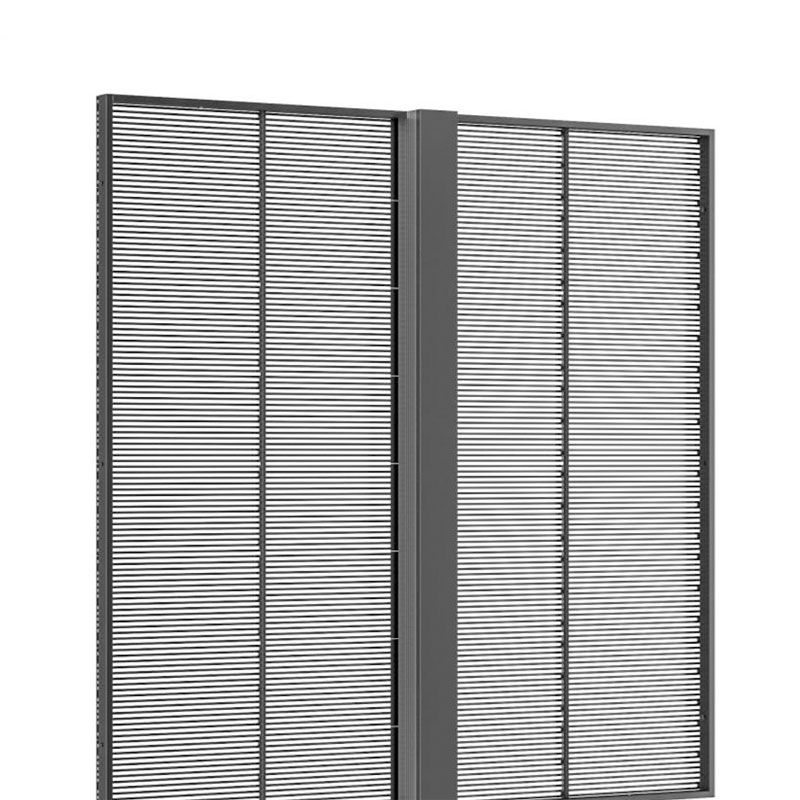
In the outdoor display sector, LED grille display are capturing market share through their differentiated advantages, emerging as a popular choice for building facades, cultural tourism projects, commercial complexes, and similar applications. Compared to traditional outdoor LED displays, they achieve breakthroughs in structural design, environmental adaptability, and operational costs, precisely addressing numerous pain points of conventional outdoor screens. Below are insights shared by Allenson.

Structural Design: Transparent, Lightweight, and Highly Adaptable
Traditional outdoor LED screens typically feature a dense panel structure with extremely low transparency. Once installed, they obstruct building facades or the scenery behind them, impairing natural lighting and ventilation while compromising architectural aesthetics. LED grille screens, however, employ a perforated grille structure with 30%-80% transparency. They allow natural light to pass through during playback and blend seamlessly with building facades when unlit during daytime, avoiding visual disruption.
Traditional outdoor screens are heavy per square meter, demanding high load-bearing capacity from installation structures. Large-scale projects often require structural reinforcement. LED grille display utilize lightweight materials like aluminum alloy for their frames, resulting in a per-square-meter weight significantly lower than traditional screens. This reduces load pressure on installation structures, simplifies installation processes, and cuts steel structure construction costs and timelines, making them suitable for older buildings or scenarios with limited load-bearing capacity.
Environmental Adaptability: Excellent Wind Resistance and Heat Dissipation for Complex Environments
Outdoor displays endure extreme weather like strong winds and heavy rain. Traditional seamless displays have high wind resistance coefficients, leading to safety hazards like structural deformation and screen detachment. LED grille displayperforated structure allows airflow to pass through smoothly, reducing wind resistance to just 1/3 to 1/2 that of traditional displays. This significantly enhances wind resistance, offering clear advantages in coastal areas, high-altitude installations, and other high-wind scenarios.
Traditional outdoor displays, operating in high temperatures with limited cooling space, are prone to chip damage and brightness degradation. The openwork structure of LED grille screens creates natural heat dissipation channels. Combined with module cooling designs, they rapidly dissipate operational heat, controlling device temperatures. This enables stable operation even during summer heatwaves, reducing failures and lowering maintenance costs.
Operating Costs: Energy-Efficient, Eco-Friendly, and Low-Maintenance
Traditional outdoor displays require high power consumption to maintain visibility in bright sunlight, resulting in high electricity costs. LED grille display utilize energy-efficient LED chips and intelligent brightness adjustment technology, automatically adapting to ambient light levels. For equivalent display areas, they consume only 50%-70% of the power used by traditional screens, delivering significant long-term electricity savings.
When a local module fails in traditional outdoor displays, repairs require dismantling large sections of the screen, involving complex operations and prolonged downtime for the entire display. LED grid displays feature a modular design where each module operates independently. In case of failure, the faulty module can be precisely located and replaced individually. The openwork structure facilitates access to the rear of modules for maintenance personnel, simplifying the repair process, reducing downtime, and minimizing economic losses.
Display & Creativity: Flexible Customization, Expanded Applications
Traditional outdoor displays typically feature fixed rectangular shapes, making them ill-suited for creative scenarios like curved architecture. LED grille screens support modular splicing, enabling customization into curved, irregular, and other forms to achieve “curved surface display.” This adapts to creative light shows on urban landmarks, personalized advertising displays in commercial complexes, and other applications, creating unique visual effects.
Outdoor displays must deliver optimal viewing experiences for distant audiences. LED grille display offer flexible pixel pitch selection, allowing parameters to be matched to viewing distances to ensure clarity at a distance. Their high refresh rate design (≥1920Hz) eliminates screen flicker and enhances dynamic image smoothness, making them ideal for advertising videos, cultural tourism light shows, and similar content.
In summary, compared to traditional outdoor displays, LED grille display screens precisely address outdoor display challenges with core advantages: high transparency, strong wind resistance, excellent heat dissipation, low energy consumption, and easy maintenance. They achieve breakthroughs in creative customization and scene adaptability. For outdoor display projects prioritizing environmental integration, safety, stability, and long-term cost-effectiveness, they represent a more competitive choice. As technology advances, their application scope will expand further, positioning them as a core force in future outdoor creative displays.
Related News
- What are the advantages of purchasing outdoor LED displays directly from the manufacturer?
- How to Choose a Manufacturer for Stadium LED Displays: Key Tips for Avoiding Pitfalls in Project Procurement?
- How Do Stadium LED Displays Balance Viewing Quality and Durability?
- How to Choose an LED Floor Tile Display for Stage Interactions?
- What advantages can you gain by purchasing flexible LED displays directly from the manufacturer?
- What Makes Antibacterial Toilet Bowl Cleaner Essential for a Hygienic Bathroom?
Leave me a message