English
- English
- Español
- Português
- русский
- Français
- 日本語
- Deutsch
- tiếng Việt
- Italiano
- Nederlands
- ภาษาไทย
- Polski
- 한국어
- Svenska
- magyar
- Malay
- বাংলা ভাষার
- Dansk
- Suomi
- العربية
- हिन्दी
- Pilipino
- Türkçe
- Gaeilge
- Indonesia
- Norsk
- تمل
- český
- ελληνικά
- український
- Javanese
- فارسی
- தமிழ்
- తెలుగు
- नेपाली
- Burmese
- български
- ລາວ
- Latine
- Қазақша
- Euskal
- Azərbaycan
- Slovenský jazyk
- Македонски
- Lietuvos
- Eesti Keel
- Română
- Slovenski
- मराठी
- Srpski језик

News
How To Select The Right Transparent LED Display For Your Building Facade
I have been in the digital signage industry for a long time, and one question I hear more and more from architects, building managers, and brand marketers is this very one. Selecting a Transparent LED Display for your building’s facade isn't just about buying a screen, it is about making a strategic investment in your property’s identity and value. It can feel like a complex maze of technical specs. Having worked closely with the engineering team at Allenson for years, I have guided countless clients through this process. Let me walk you through the key considerations from a practical, not just a theoretical, standpoint.

What Are The Core Technical Parameters You Must Consider
Before you get swept away by stunning visuals, you need to lay the technical groundwork. Getting these fundamentals wrong is the most common and costly mistake I see. Think of this as your essential checklist.
-
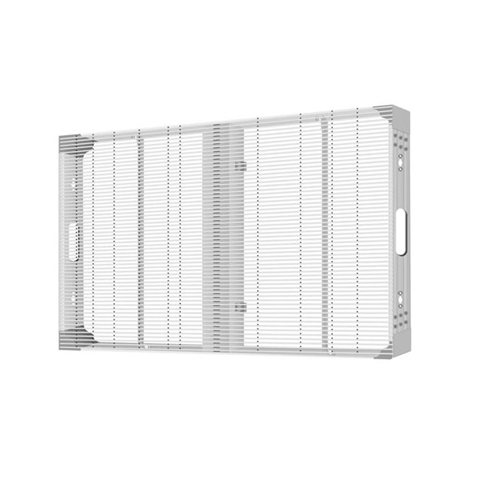
Transparency Rate This is the star of the show. A high transparency rate means your view remains largely unobstructed while dynamic content is displayed. We are not talking about a static film, this is a true Transparent LED Display. For most building facades, you will want a rate between 70% and 85%. A lower rate might mean a brighter image but a more blocked view, which often defeats the purpose.
-
Pixel Pitch This spec determines the image's clarity. Pixel pitch is the distance (in millimeters) from the center of one LED cluster to the next. A smaller number, like a P3.9 or P5.9, means a higher resolution for closer viewing distances. For a building facade where people might be both up close and far away, you need to find the sweet spot between clarity and cost.
-
Brightness You cannot have a dim display fighting with the sun. A quality Transparent LED Display must be vibrant at noon. We recommend a minimum of 5,000 nits for most applications, with 6,500 nits or more for south-facing walls or locations with intense, direct sunlight.
Here is a quick reference table to help you visualize these core specs for a typical mid-range application:
| Key Parameter | Why It Matters | Our Recommended Sweet Spot |
|---|---|---|
| Transparency Rate | Balances digital content with natural light and view-through. | 75% - 80% |
| Pixel Pitch (P) | Determines image clarity and optimal viewing distance. | P3.9 - P7.8 |
| Brightness (Nits) | Ensures visibility in direct sunlight. | 5,000 - 7,000 nits |
How Do You Ensure The Display Integrates With Your Architecture
This is where art meets science. The last thing you want is a screen that looks like an ugly afterthought. The goal is a seamless integration that enhances, not harms, your building’s aesthetic. I always advise clients to think about the structural load, the power and data requirements, and perhaps most importantly, the content strategy. A blank Transparent LED Display is a canvas, but what you paint on it defines its success. At Allenson, our design team sits down with you to create custom mounting solutions that respect the integrity of your structure. We have seen projects fail not because of the technology, but because of poor planning for these physical and creative integrations.
Is The Display Built To Last In Your Specific Environment
Your building’s facade takes a beating from the elements. Your display must be tougher. A common pain point I have helped clients overcome is the premature failure of displays that were not built for the specific local environment. You need to ask your supplier about the Ingress Protection (IP) rating. For outdoor applications, a rating of IP65 is the absolute minimum, meaning it is dust-tight and protected against water jets. For areas with heavy rain or salt spray, you should look for IP66 or higher. The team at Allenson takes this so seriously that we subject our Transparent LED Display units to accelerated life testing, simulating years of weather abuse in just a few months to ensure reliability. This rugged construction is a non-negotiable feature for any permanent facade installation.
What Kind Of Content Management System Do You Need
A brilliant display is useless if it is a nightmare to operate. I have lost count of the clients who came to me frustrated with clunky, complicated software. The best Transparent LED Display solutions come with an intuitive, cloud-based Content Management System (CMS). You should be able to schedule content, play videos, and monitor the screen's health from any device, anywhere. The system we provide at Allenson, for instance, is so straightforward that your marketing team can update a campaign in minutes without any specialized technical training. This ease of use transforms the display from a static piece of tech into a dynamic, responsive tool for your business.
Making the final choice on a Transparent LED Display is a significant decision. It is about partnering with a provider who offers not just a product, but a comprehensive solution—from initial design and robust hardware to effortless software and long-term support. My two decades in this field have taught me that the right partnership is everything. We at Allenson are confident we have the expertise, the technology, and the commitment to be that partner for you.
Do not let uncertainty hold your project back. Contact us today for a free, no-obligation consultation and a personalized quote. Let our team of experts help you bring your vision to life. We are ready to answer all your questions.
Related News
- What are the advantages of purchasing outdoor LED displays directly from the manufacturer?
- How to Choose a Manufacturer for Stadium LED Displays: Key Tips for Avoiding Pitfalls in Project Procurement?
- How Do Stadium LED Displays Balance Viewing Quality and Durability?
- How to Choose an LED Floor Tile Display for Stage Interactions?
- What advantages can you gain by purchasing flexible LED displays directly from the manufacturer?
- What Makes Antibacterial Toilet Bowl Cleaner Essential for a Hygienic Bathroom?
Leave me a message