English
- English
- Español
- Português
- русский
- Français
- 日本語
- Deutsch
- tiếng Việt
- Italiano
- Nederlands
- ภาษาไทย
- Polski
- 한국어
- Svenska
- magyar
- Malay
- বাংলা ভাষার
- Dansk
- Suomi
- العربية
- हिन्दी
- Pilipino
- Türkçe
- Gaeilge
- Indonesia
- Norsk
- تمل
- český
- ελληνικά
- український
- Javanese
- فارسی
- தமிழ்
- తెలుగు
- नेपाली
- Burmese
- български
- ລາວ
- Latine
- Қазақша
- Euskal
- Azərbaycan
- Slovenský jazyk
- Македонски
- Lietuvos
- Eesti Keel
- Română
- Slovenski
- मराठी
- Srpski језик

News
How to Choose the Right Fixed Installation LED Display Installation Method?
Fixed installation LED displays are typically not frequently disassembled or moved after installation, forming a rigid connection with the building structure or supporting structure to ensure reliable visual output under various environmental conditions.
Characteristics of Fixed LED Displays
Fixed installation requires the Fixed Installation LED Display to have high structural strength and shock resistance. Mechanical connections between cabinets must achieve seamless splicing to ensure the integrity of the displayed image. Protective performance must adapt to changes in temperature and humidity, dust, or rain erosion in the installation environment, and internal electronic components must have long-term operational stability. The heat dissipation system must be compatible with the installation structure to avoid performance degradation due to heat accumulation. Furthermore, the installation structure must provide reasonable maintenance access for easy future repairs.
Application Scenarios
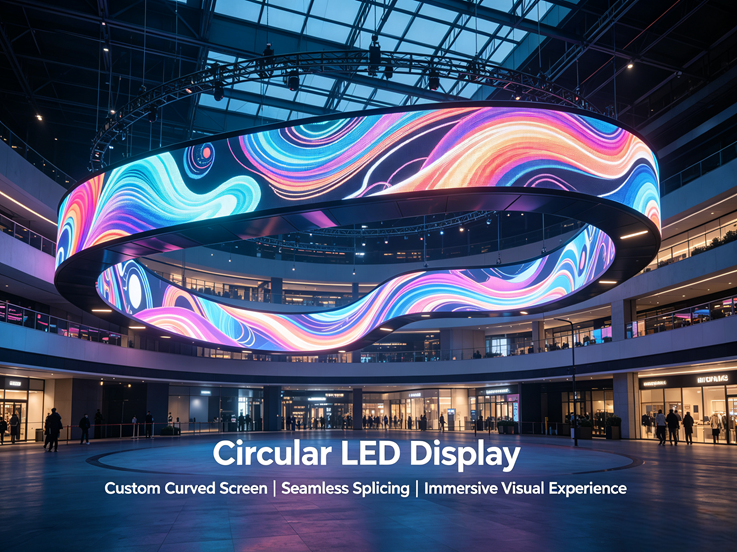
Fixed installations are suitable for locations with long-term needs for the display system. Indoor environments are commonly found in commercial building atriums, conference room backdrops, monitoring and command centers, and other scenarios requiring continuous operation. Outdoor installations are concentrated in open-air locations such as building facade advertising screens, transportation hub information displays, and sports stadium event timing screens, requiring resistance to natural elements such as wind, rain, and ultraviolet radiation. Installation locations are typically chosen within load-bearing walls, steel frame structures, or custom-made bases, with designs that must be compatible with the building's existing structural loads and safety regulations.
Key Concerns for Clients Choosing Installation Methods:
First, when installing Fixed Installation LED Display, clients prioritize the safety of the installation plan, including the impact of the display's weight on the building's load-bearing capacity, wind and earthquake resistance design levels, and fireproof insulation of electrical wiring.
Second, they value the visual presentation; the installation angle must match the height and viewing angle of the primary viewing area to avoid image distortion.
Third, they consider maintenance feasibility, clearly defining the physical space and maintenance paths for future module and power supply replacements.
Fourth, cost control is crucial, including the cost of the installation base, special hoisting equipment, and labor costs for subsequent Maintenance.
Finally, they must assess the impact of the installation on the surrounding environment, such as light pollution from the light source in residential areas and noise control during operation.

Common Issues with Fixed LED Display Installation
How to Choose an Installation Method Based on the Building Structure?
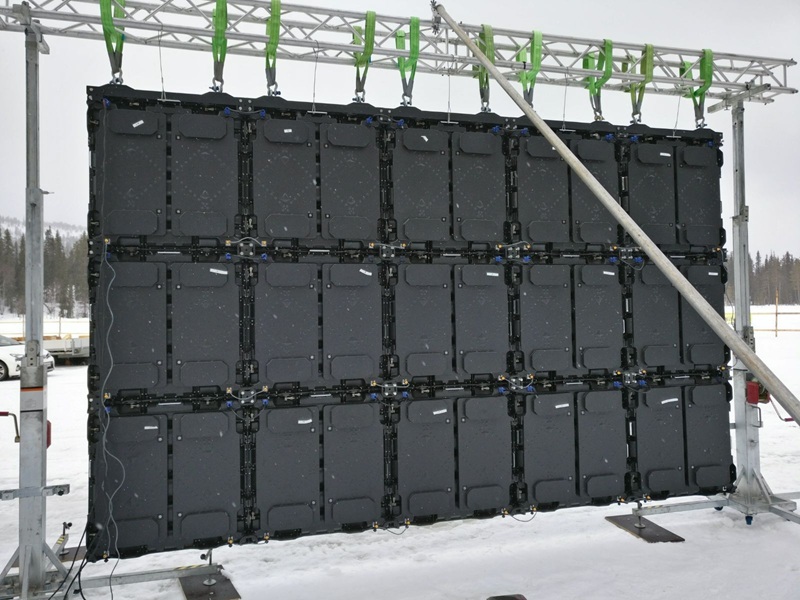
The load-bearing capacity and material properties of the mounting surface need to be assessed. Concrete walls can be directly fixed using chemical anchors; steel structures require calculation of beam load distribution before welding support frames; glass curtain walls require clamp-type frames to distribute stress. The stress plan must be reviewed by a structural engineer before installation.
How Does the Installation Method Affect the Display Screen Viewing Effect?
The installation tilt angle determines the optimal viewing angle. Flat mounting is suitable for long-distance viewing, while forward-tilted installation can improve brightness attenuation at low viewing angles. Installation flatness error must be controlled within millimeters to avoid bright lines and screen tearing caused by module misalignment.
How to Balance Fixed Installation with Future Maintenance Needs?
Maintenance access space must be reserved during the design phase. Single-point maintenance structures allow for module removal from the front, while rear maintenance requires reserved width for the inspection passage. The enclosure should be connected with quick-locking devices, and the power supply and receiver card should be modularly laid out to shorten troubleshooting time.
Related News
- What are the advantages of purchasing outdoor LED displays directly from the manufacturer?
- How to Choose a Manufacturer for Stadium LED Displays: Key Tips for Avoiding Pitfalls in Project Procurement?
- How Do Stadium LED Displays Balance Viewing Quality and Durability?
- How to Choose an LED Floor Tile Display for Stage Interactions?
- What advantages can you gain by purchasing flexible LED displays directly from the manufacturer?
- What Makes Antibacterial Toilet Bowl Cleaner Essential for a Hygienic Bathroom?
Leave me a message