English
- English
- Español
- Português
- русский
- Français
- 日本語
- Deutsch
- tiếng Việt
- Italiano
- Nederlands
- ภาษาไทย
- Polski
- 한국어
- Svenska
- magyar
- Malay
- বাংলা ভাষার
- Dansk
- Suomi
- العربية
- हिन्दी
- Pilipino
- Türkçe
- Gaeilge
- Indonesia
- Norsk
- تمل
- český
- ελληνικά
- український
- Javanese
- فارسی
- தமிழ்
- తెలుగు
- नेपाली
- Burmese
- български
- ລາວ
- Latine
- Қазақша
- Euskal
- Azərbaycan
- Slovenský jazyk
- Македонски
- Lietuvos
- Eesti Keel
- Română
- Slovenski
- मराठी
- Srpski језик

News
Can LED rental screens be used outdoors?
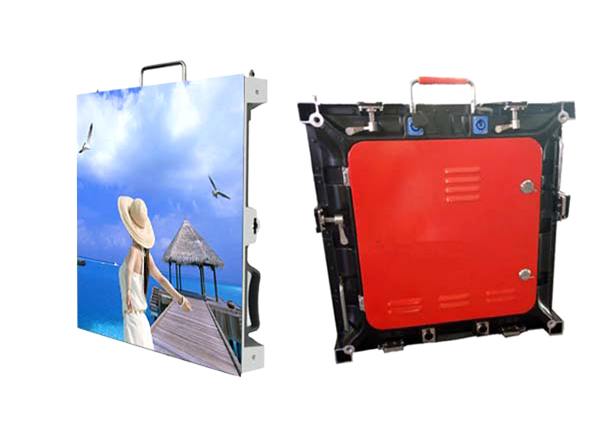
LED Rental Displays can be used outdoors but must meet corresponding protection standards. Commonly employed in events, performances, exhibitions, and similar scenarios, their core advantages lie in modularity, rapid installation, and flexible splicing. Whether suitable for outdoor use requires comprehensive evaluation based on technical specifications and on-site conditions. The following explains three key aspects: protection rating, environmental adaptability, and installation standards.

I. Protection Rating as the Fundamental Threshold
The primary challenges posed by outdoor environments to LED Rental Displays stem from rain, dust, humidity, and temperature fluctuations. Qualified outdoor LED Rental Displays must achieve an IP65 protection rating or higher:
IP65: Fully dustproof and capable of withstanding low-pressure water jets from any direction (e.g., light rain conditions).
IP67: Withstands short-term immersion (e.g., standing water after heavy rain), though prolonged submersion may still damage internal circuits.
Insufficient protection ratings risk water ingress causing module short circuits, while dust accumulation impairs heat dissipation and display performance.
II. Environmental Adaptability Requires Targeted Optimization
Brightness and Glare Resistance: Under direct sunlight, screen brightness must ≥5000 nits and feature anti-reflective coating to prevent content from being obscured by ambient light.
Temperature Control: Outdoor temperature fluctuations may exceed 30°C. Implement efficient cooling structures (e.g., fans + heat sinks) or natural convection designs to prevent component aging from high temperatures or material brittleness from low temperatures.
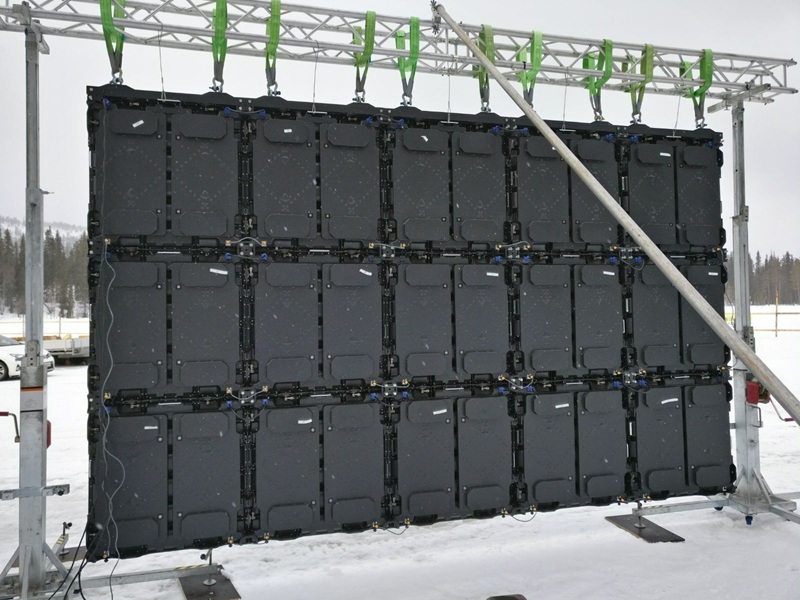
Wind Resistance & Load Capacity: Large outdoor screens require structural reinforcement (e.g., added counterweights, wind-resistant mounts) to withstand wind forces. Snow load considerations are also necessary in certain environments (e.g., northern regions).
III. Professional Installation & Maintenance Required
Basic Requirements:
Ground surfaces must be level and solid to prevent screen deformation from settlement. Power supplies require voltage stabilizers and ground fault circuit interrupters to protect against voltage fluctuations or lightning damage. Cables must be conduit-protected to avoid trampling or rodent damage.
Usage Cycle:
For short-term events (e.g., 3-5 days), standard outdoor LED rental displays suffice. Long-term fixed installations require dedicated outdoor fixed screens, which offer enhanced structural stability and extended lifespan (typically ≥8 years).
Maintenance Essentials:
Daily inspection of module connections for looseness. Prompt removal of water accumulation after rain to prevent corrosion. Regular surface dust cleaning.
IV. Typical Application Scenarios
Commercial Events: For brand launches or product exhibitions, pair with sunshades or adjust screen orientation to minimize direct sunlight.
Cultural Performances: For music festivals or outdoor theaters, coordinate with stage lighting design to prevent screen glare from distracting audiences.
Sports Events: For marathon broadcasts or stadium perimeter screens, use high refresh rates to eliminate water ripple effects during filming.
In summary, LED Rental Displays can meet outdoor requirements through technological upgrades, but products with high protection ratings should be prioritized and installation standards strictly followed. For limited budgets or extreme environments (e.g., coastal high salt fog, desert high temperatures), shortening usage cycles or switching to dedicated outdoor displays is recommended to balance costs and risks.
Related News
- What are the advantages of purchasing outdoor LED displays directly from the manufacturer?
- How to Choose a Manufacturer for Stadium LED Displays: Key Tips for Avoiding Pitfalls in Project Procurement?
- How Do Stadium LED Displays Balance Viewing Quality and Durability?
- How to Choose an LED Floor Tile Display for Stage Interactions?
- What advantages can you gain by purchasing flexible LED displays directly from the manufacturer?
- What Makes Antibacterial Toilet Bowl Cleaner Essential for a Hygienic Bathroom?
Leave me a message